OVERVIEW
Domestic abuse survivors seeking support face an exhausting reality: retelling their trauma story repeatedly to multiple organizations. We explored how trauma-informed design might reduce this re-traumatization.
We identified this need through desk research and a co-imagine workshop with 11 survivors. I developed and tested a concept for them to prepare information in advance, but validation revealed a critical insight: survivors saw the tool helpful for personal preparation and storage, not as a data-sharing mechanism.
The solution pivoted from an information-sharing tool to a personal storage hub, giving survivors a safe space to organize their documents and story on their terms without pressure to share it with organizations.

MY CONTRIBUTION
While the project was collaborative, I was incharge of creating the activity for theme 1, “support that evolves”, designing the storyboard for concept testing and the user flow diagram for the concept.
CHALLENGE
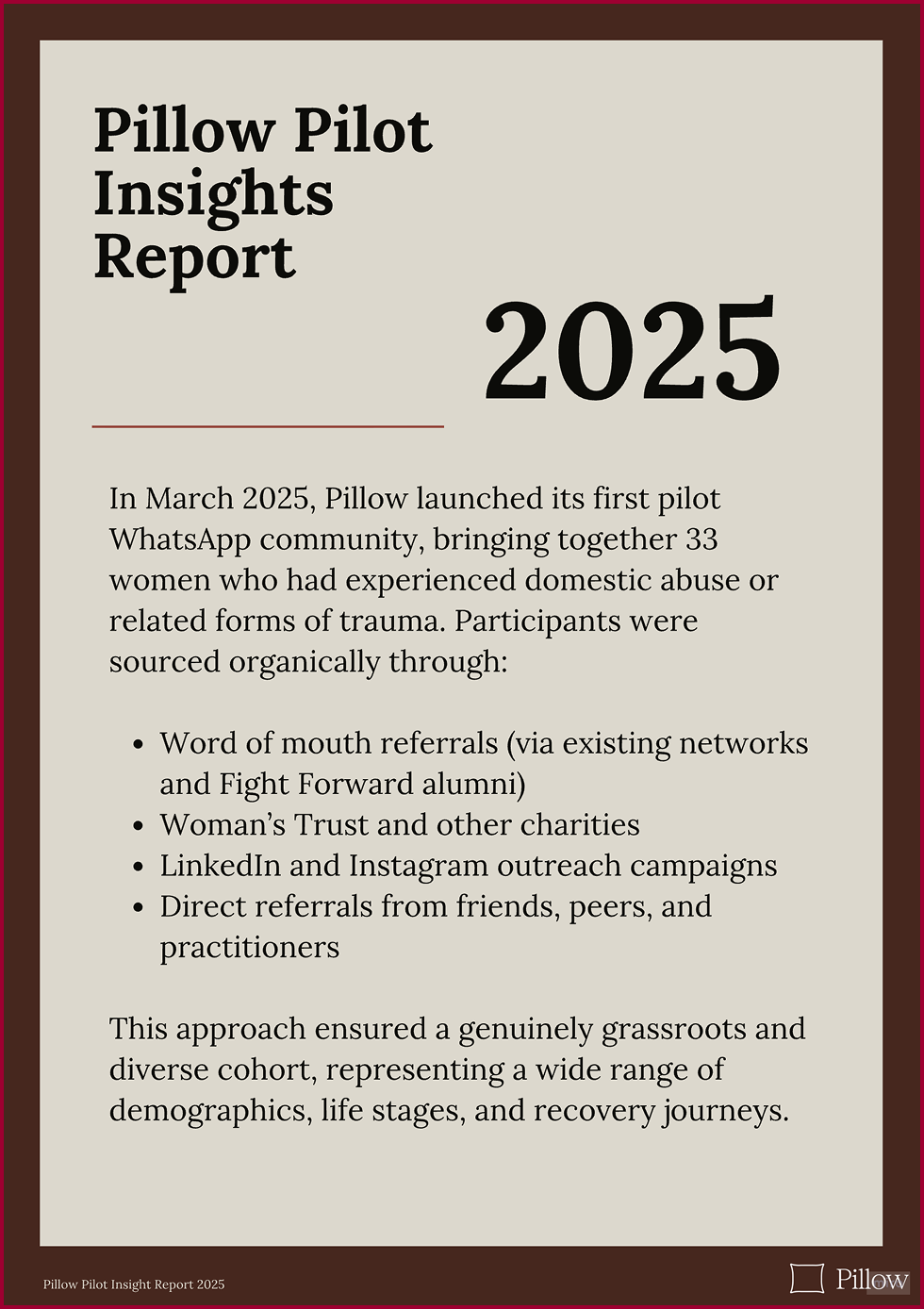
I participated in a Responsible Design for Change Fellowship by UX4C, a company that connects the purpose-driven sector with the UX community. For our cohort, they partnered with Pillow, a company that supports survivors of domestic abuse.
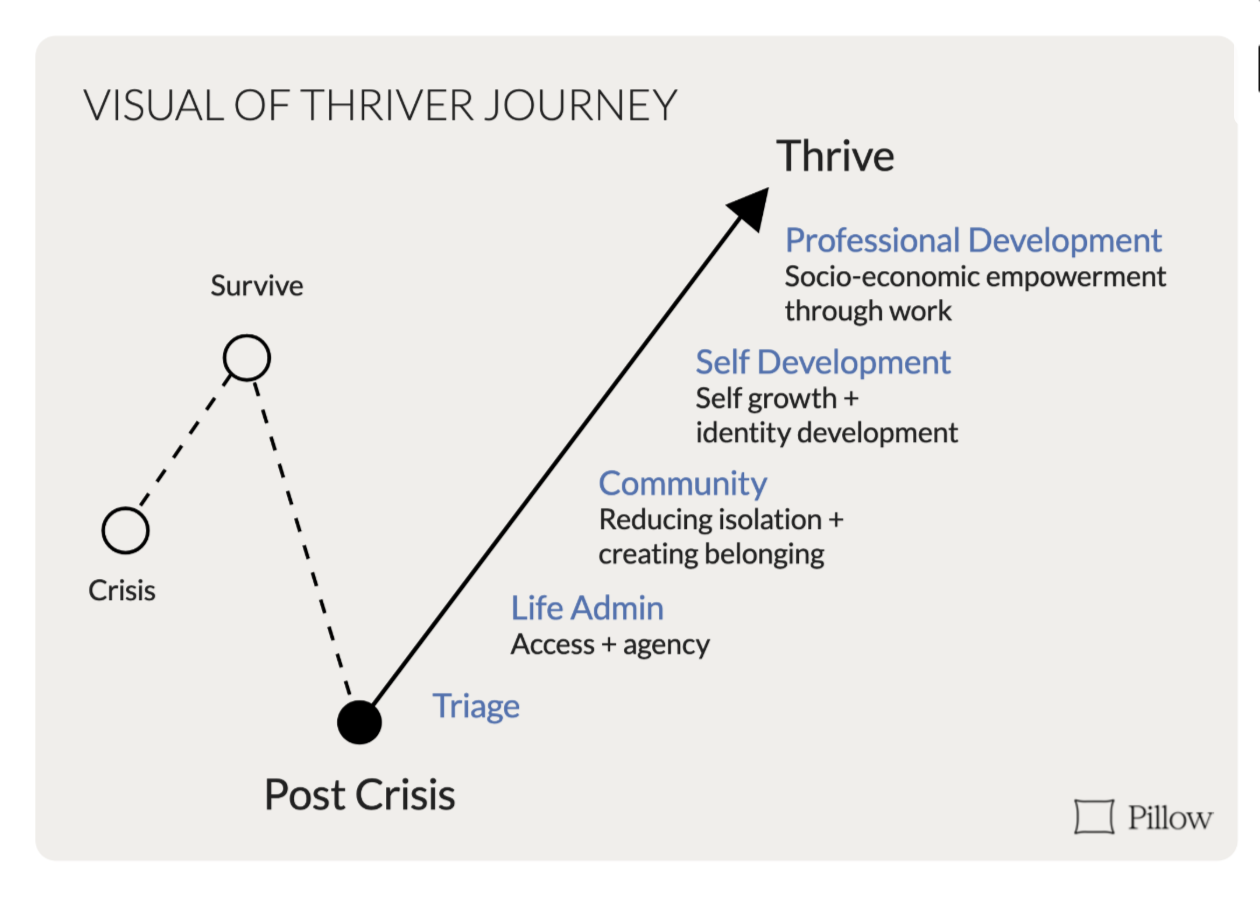
As part of the fellowship we were asked to understand the needs of survivors in a post-crisis stage, right after they had left their abusive relationship. The entire process needed to be regenerative and trauma-informed.
UNDERSTANDING THE SPACE
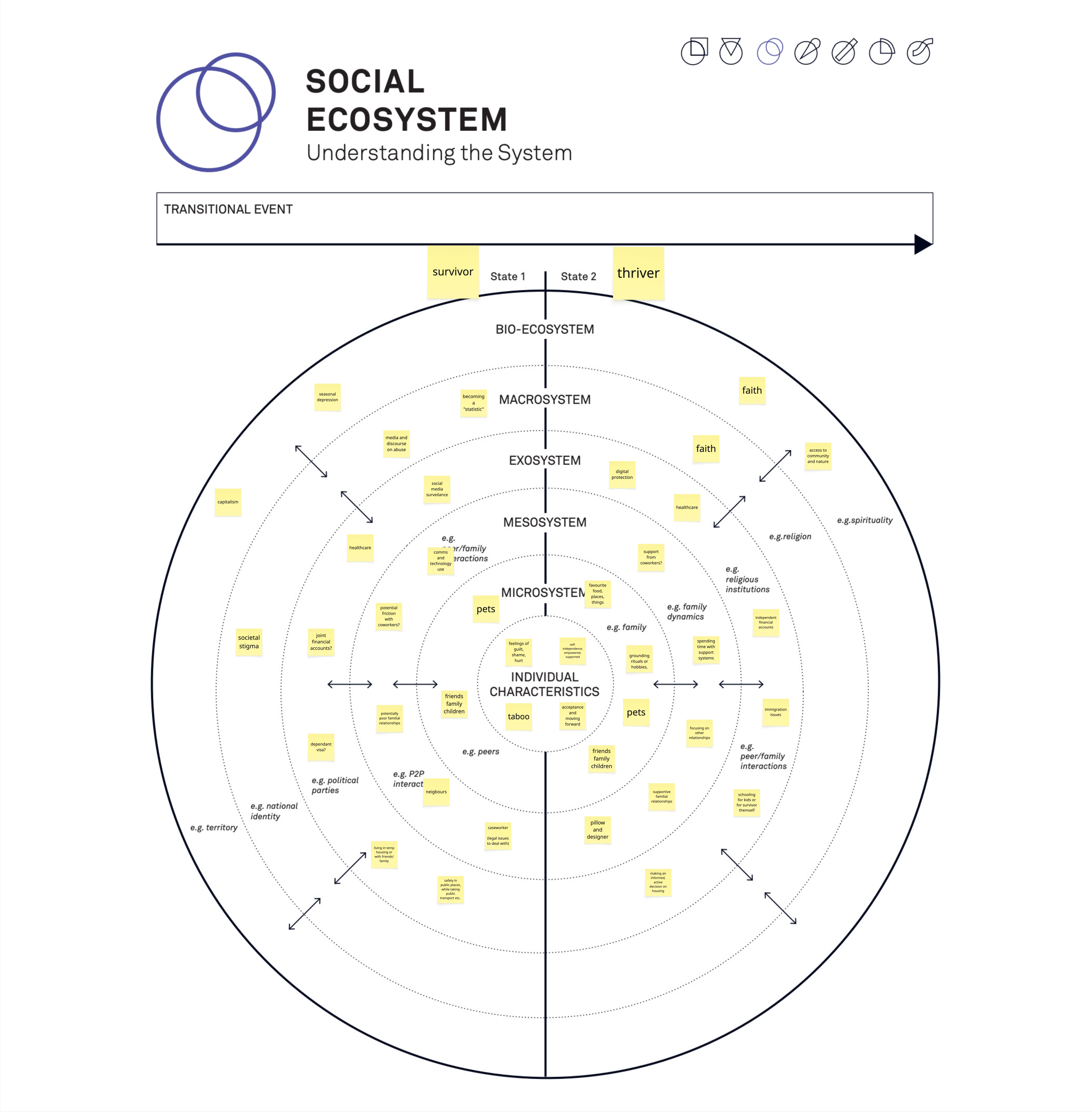
To understand what it takes for a survivor to become someone who thrives, I mapped out the ecosystem.
The map considers animate (humans and pets), inanimate (parks), tangible (money) and intangible (rituals or routines) involved in the life of a survivor.
DISCOVERY
Desk Research
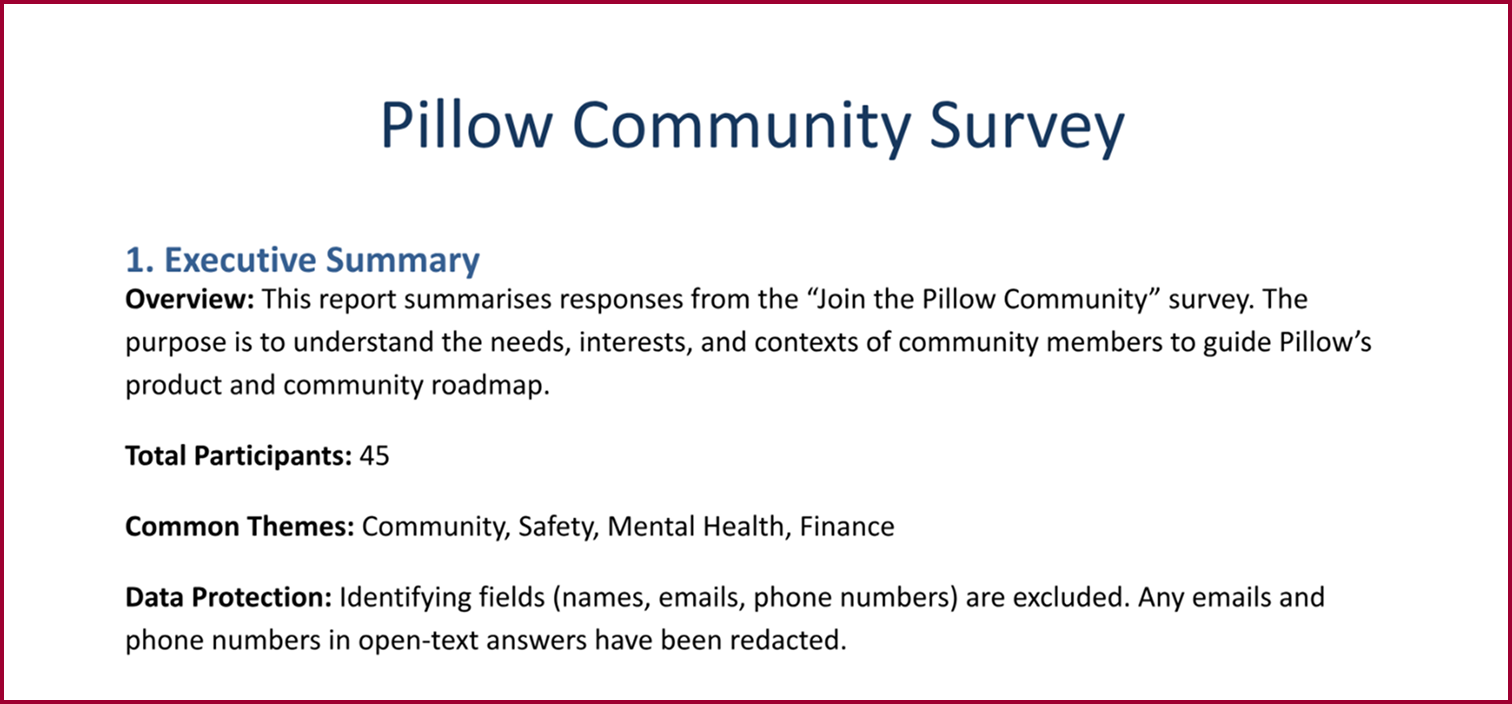
We were presented with valuable desk research in the form of profiles, surveys, interviews and reports.
Thematic analysis revealed these areas of focus:
Support that evolves with survivors
Timely access to resources
Identifying circles of closeness
Co-imagine Workshop
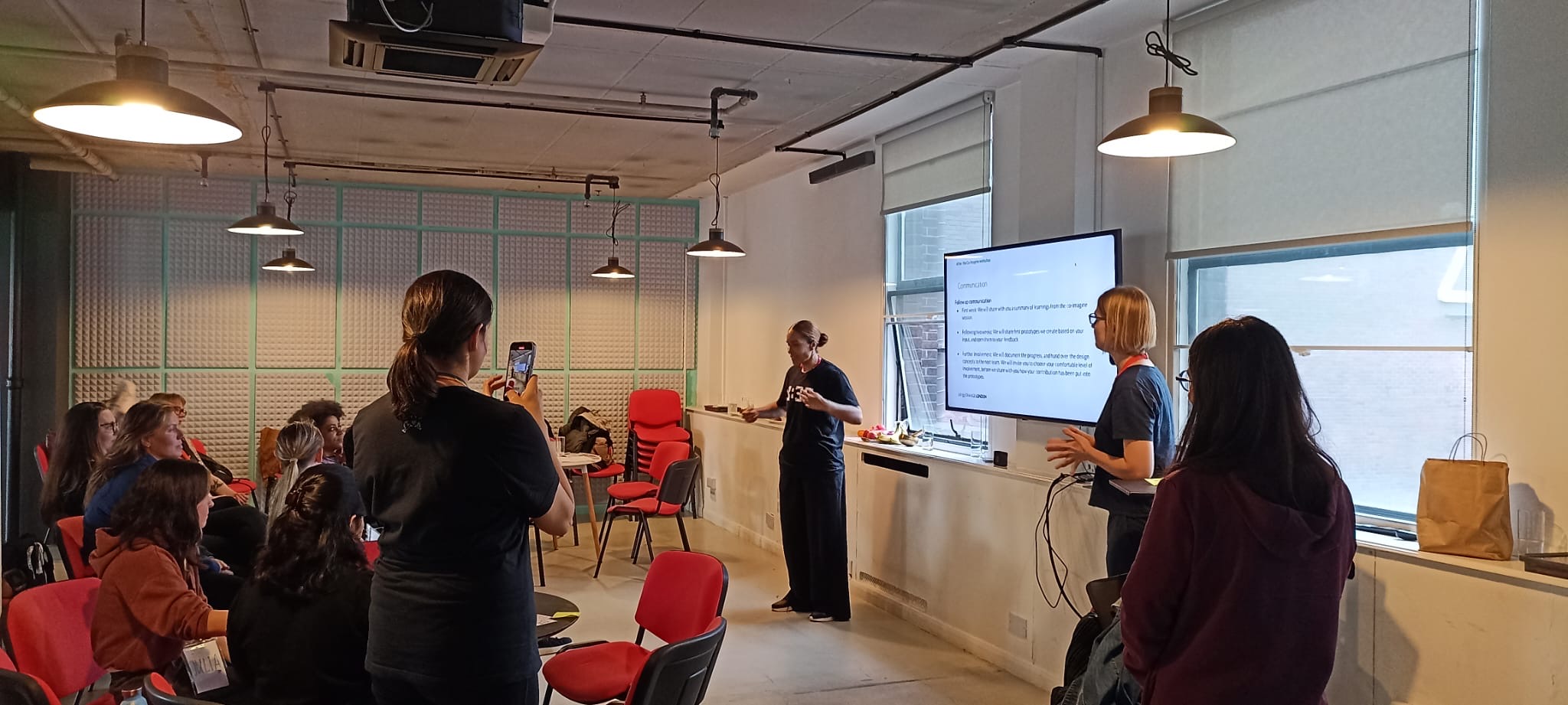
We facilitated a co-”imagine” workshop using trauma-informed approaches with 11 survivors. We conducted an empathy map and journey map exercise to explore these themes and envision their desired futures.
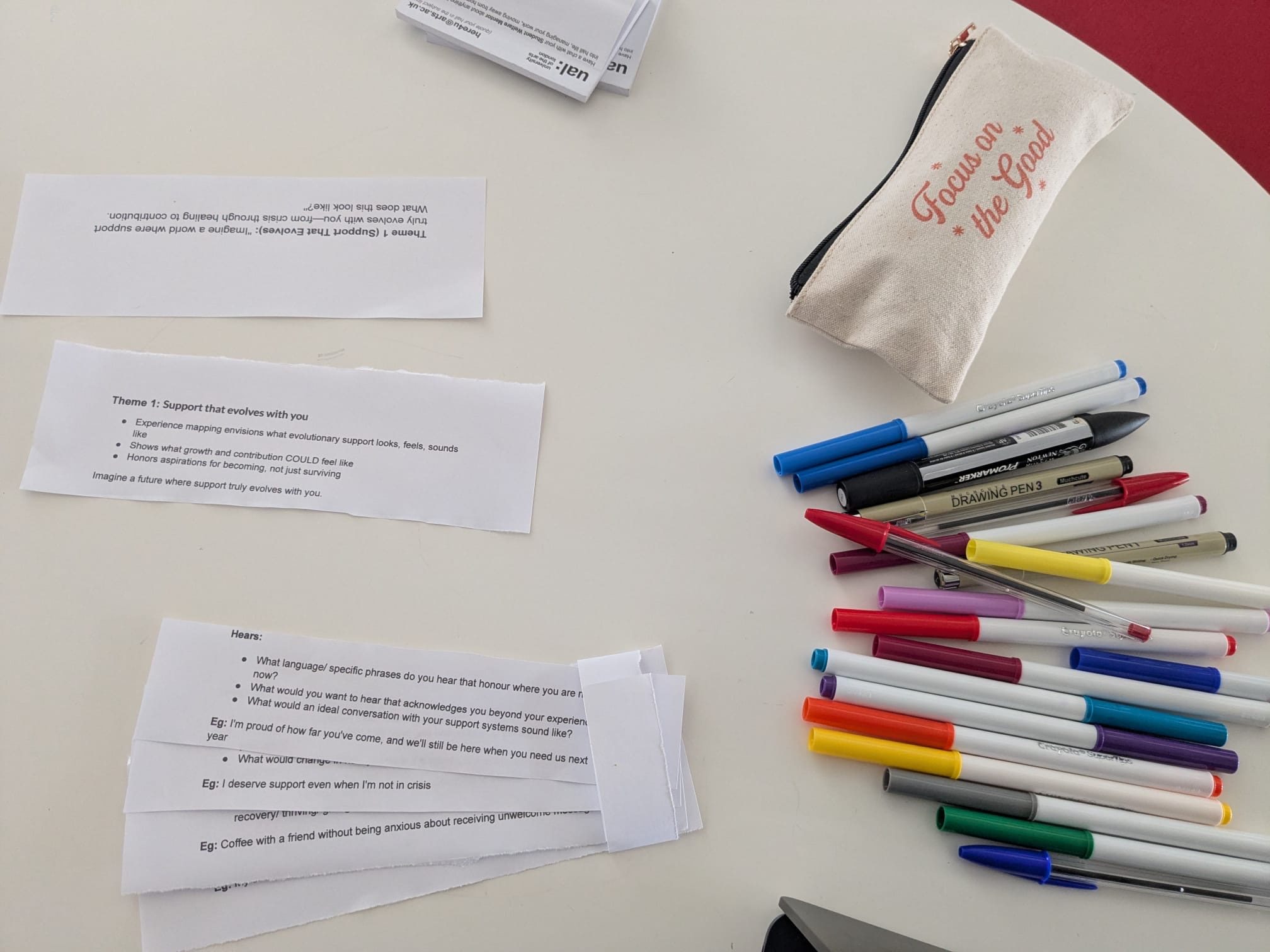
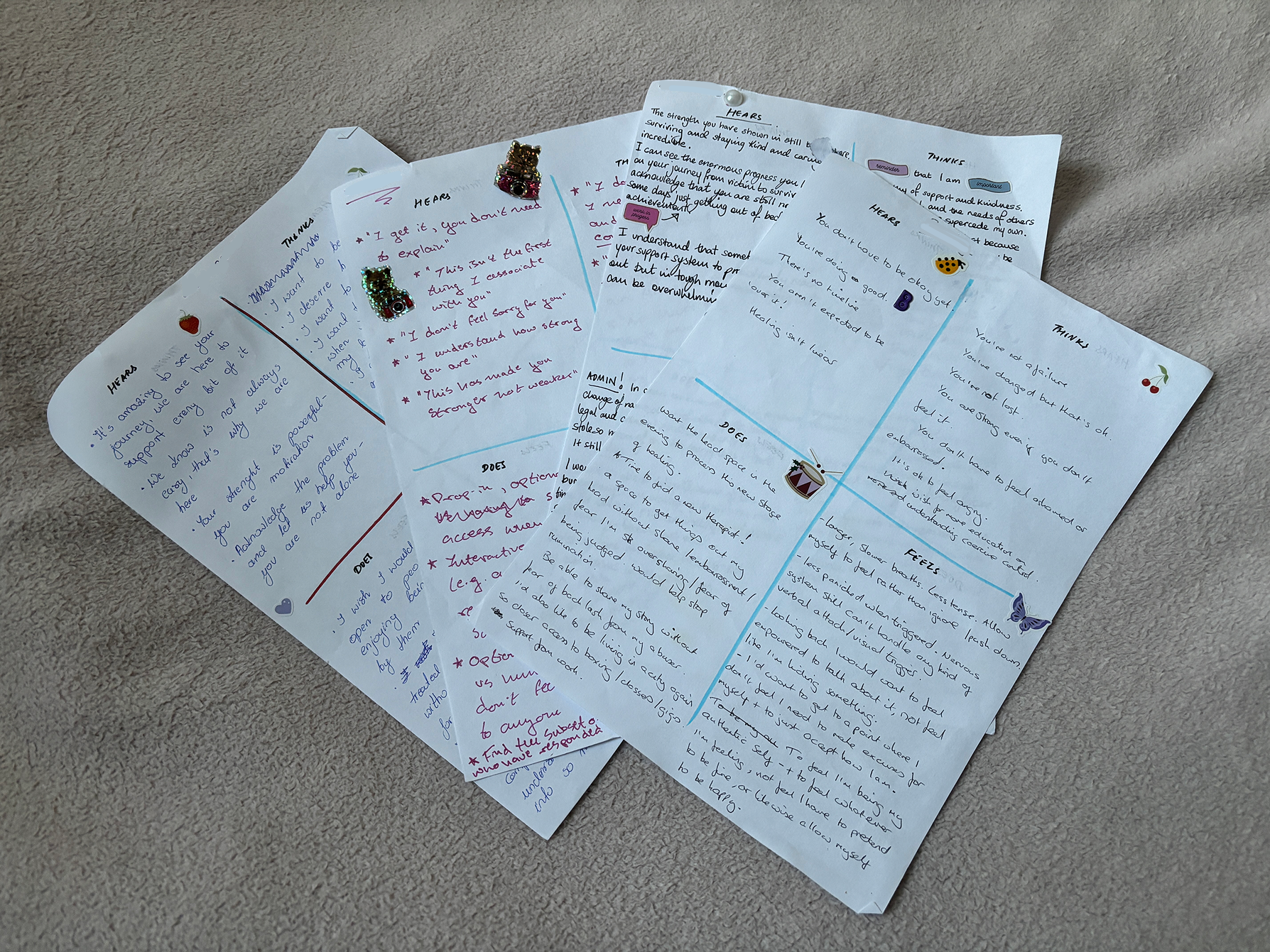
I designed and facilitated the empathy map activity for theme 1: evolving support. Through this exercise, the survivors envisioned what they would say, hear, think and feel in a future where support evolves with them. I created a set of prompt questions for each section.
Hears
What language/ specific phrases do you hear that honour where you are right now?
What would you want to hear that acknowledges you beyond your experience?
Thinks
What would make you feel truly seen and understood by the support systems you turn to?
What would change in how you think if support grew and adapted with you?
Does
What would your week look like if you could access support as needed?
What would you want organizations to do differently at different stages, in crisis/ recovery/ thriving/ giving back?
Feels
What physical sensations would tell you you’re supported?
What emotions would you like to be feeling more of, or less of, about how you were supported?
Workshop materials and artefacts
Analysis
Multiple insights emerged from the workshop, but one stood out as both urgent and actionable: survivors are exhausted by retelling their trauma at every touchpoint.
”I would like that organizations and companies would be more understanding without going into so much detail.”
Each organization asks similar questions about the abuse, safety concerns, and support needs. Yet survivors must answer them again and again, reliving their trauma with every interaction. This became our design challenge.
CONCEPT
We (Saranya, Therese and myself) began by researching the types of questions commonly asked across different organizations: police reports, counseling intake forms, workplace HR conversations, and support service assessments. We identified significant overlap in what information was being requested.
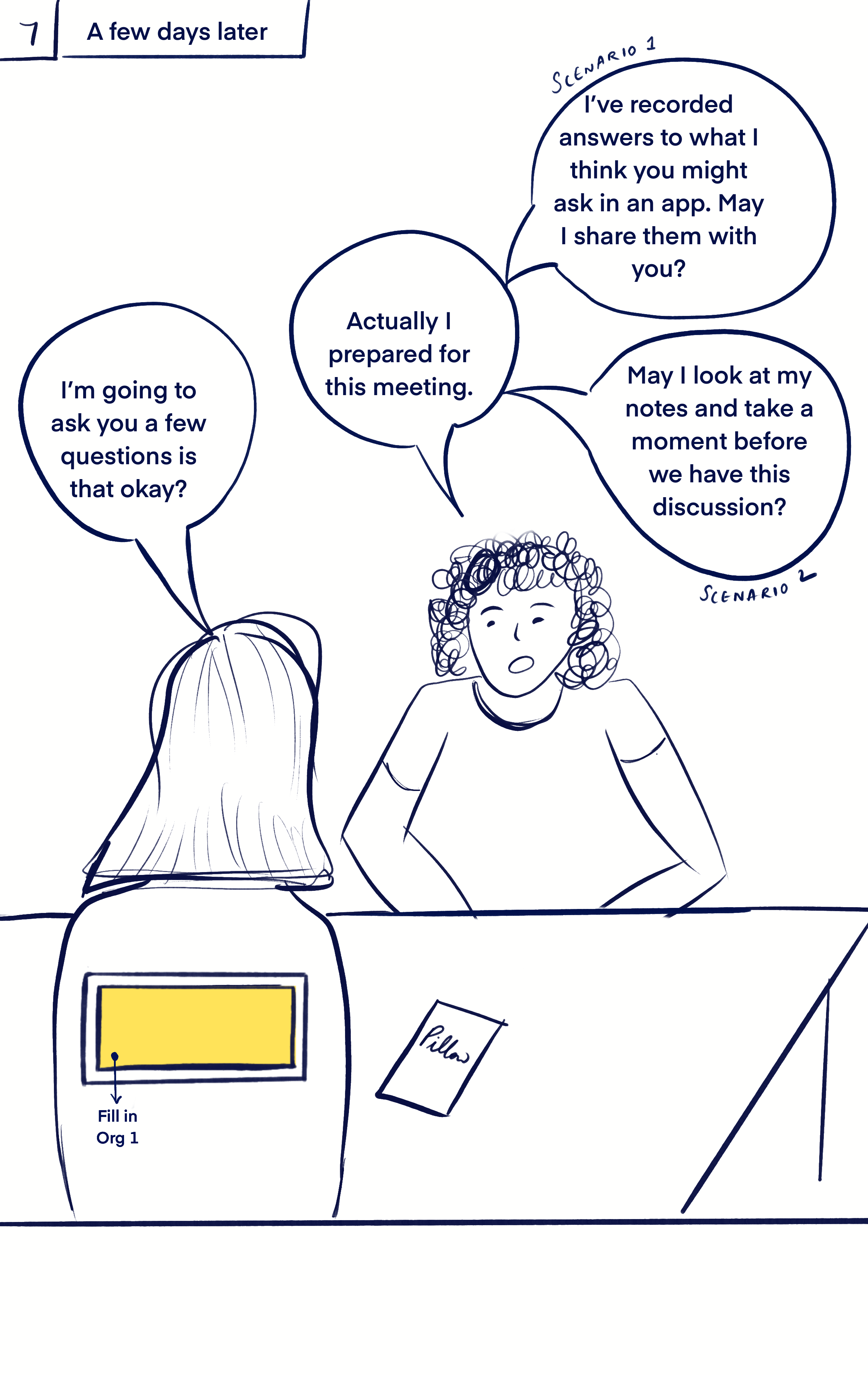
Our initial concept: what if survivors could prepare answers to these common questions in advance and share them with organizations when ready? This would let them tell their story once, on their own terms and timeline, then control who receives that information.
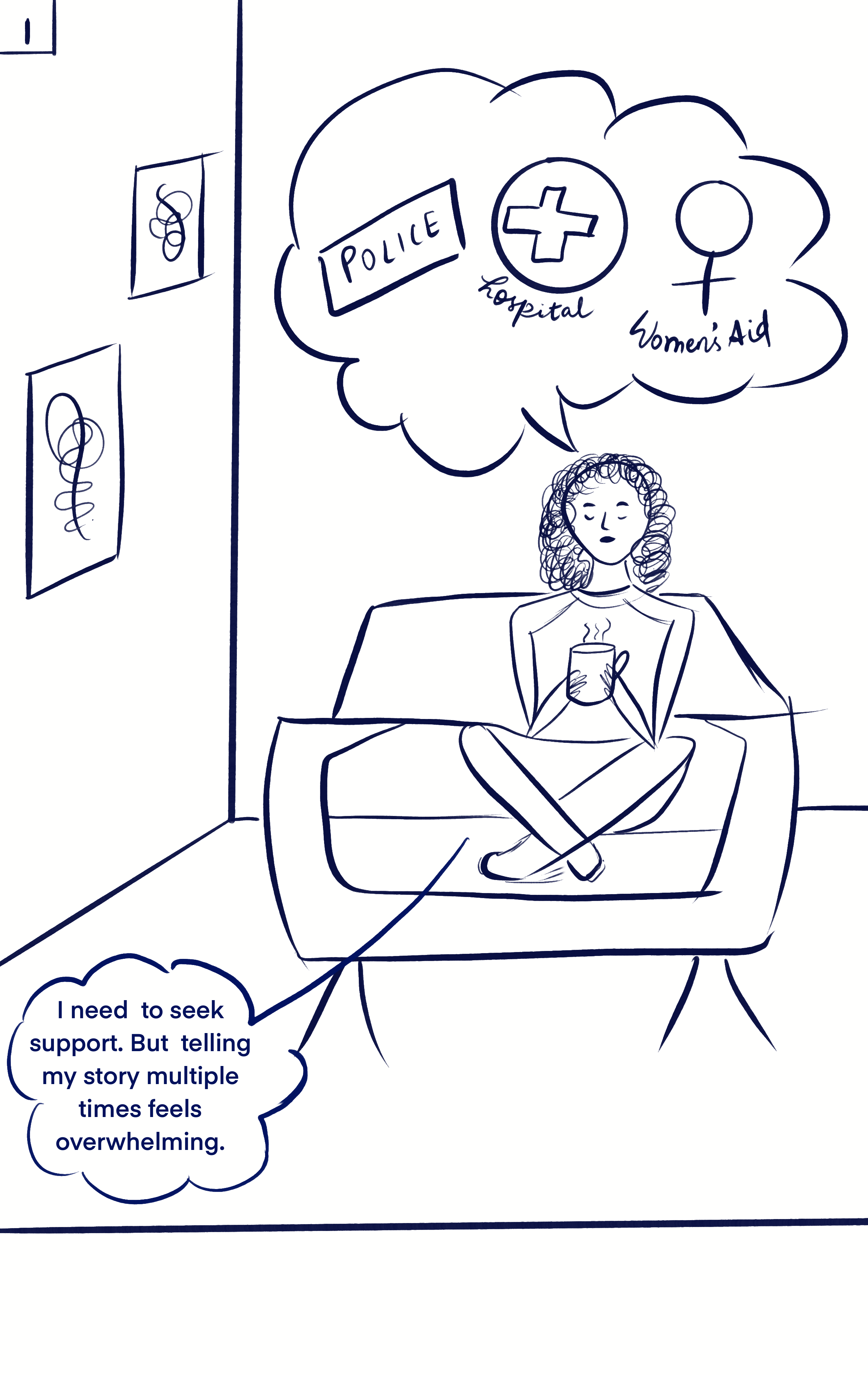
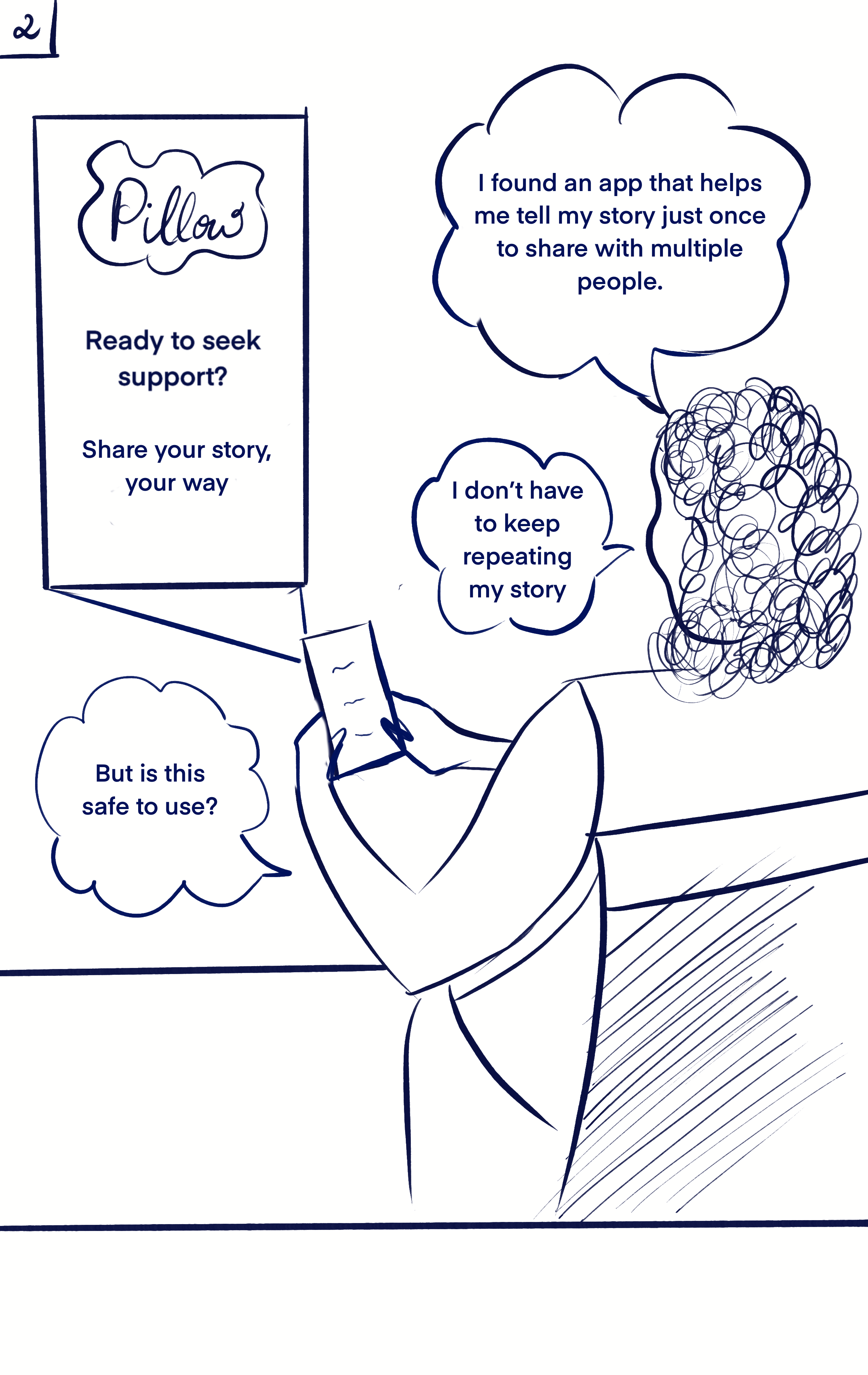
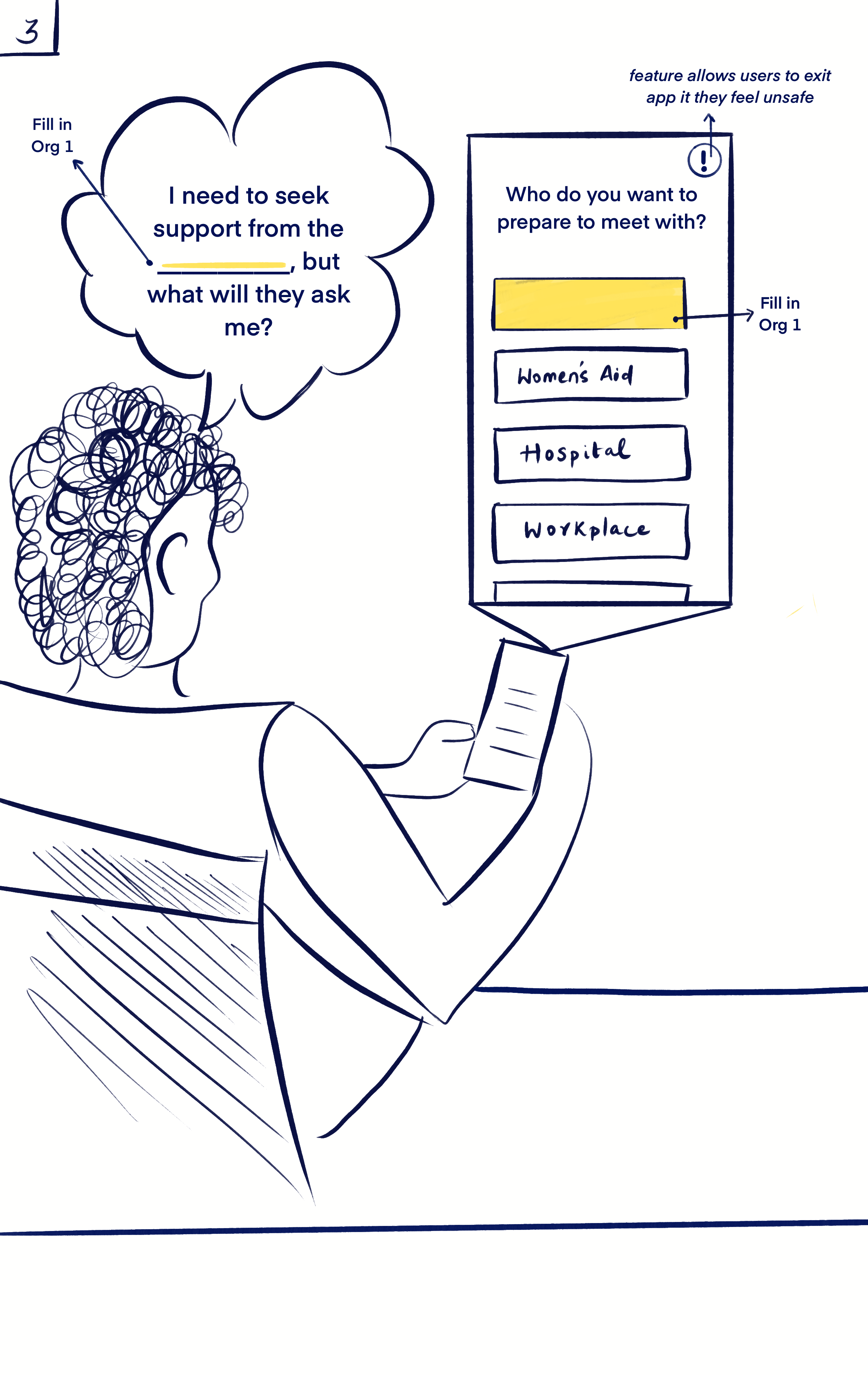
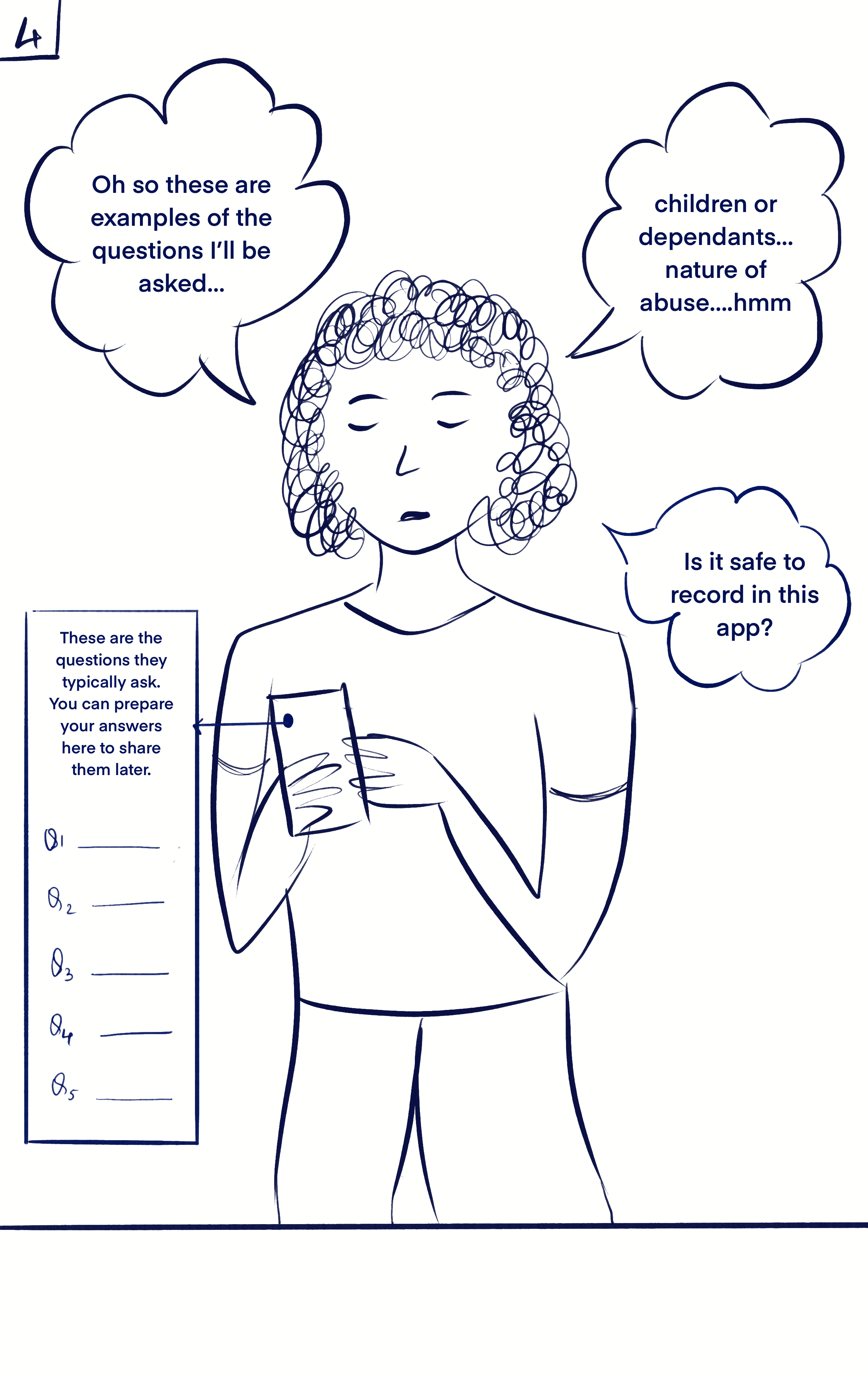
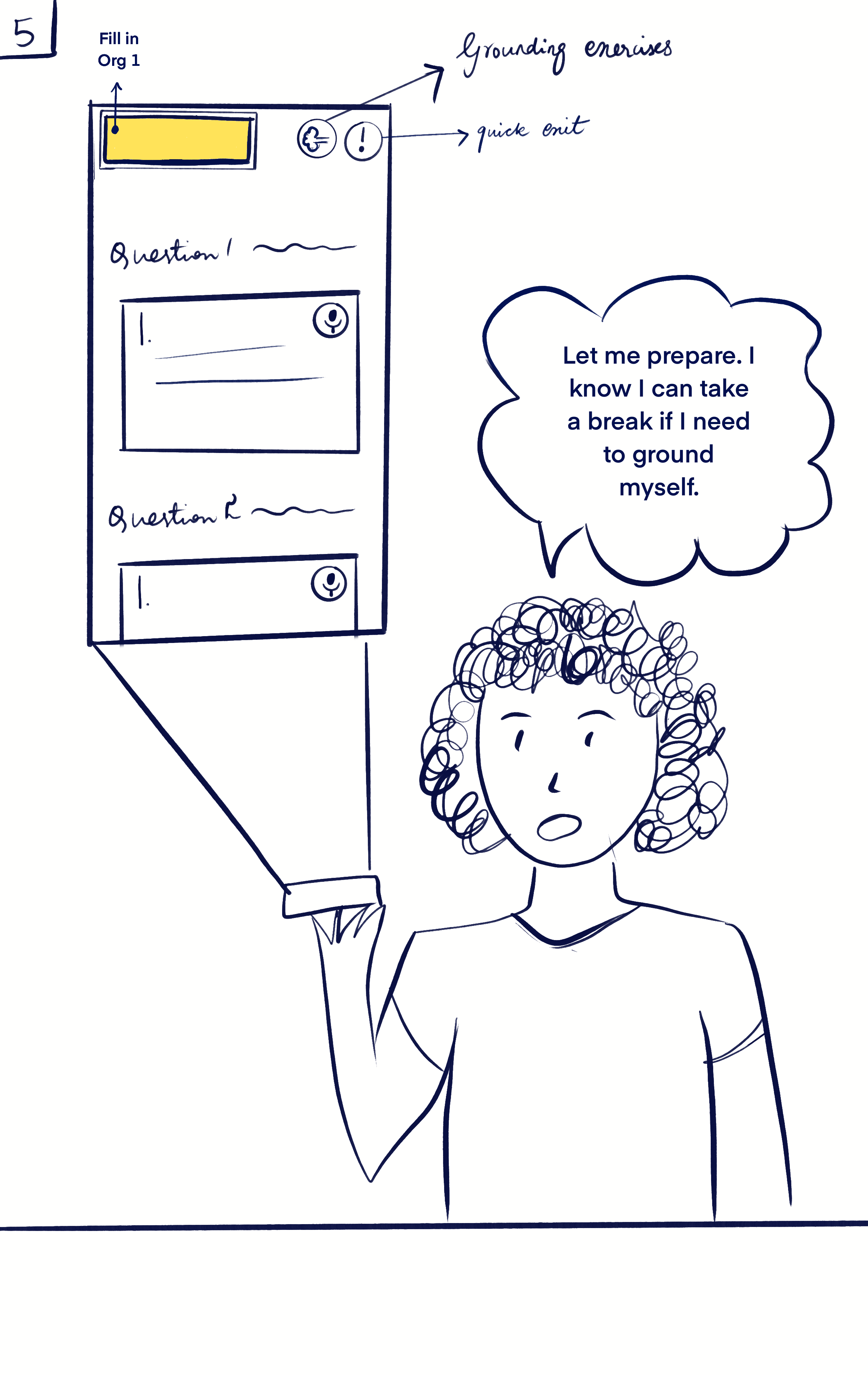
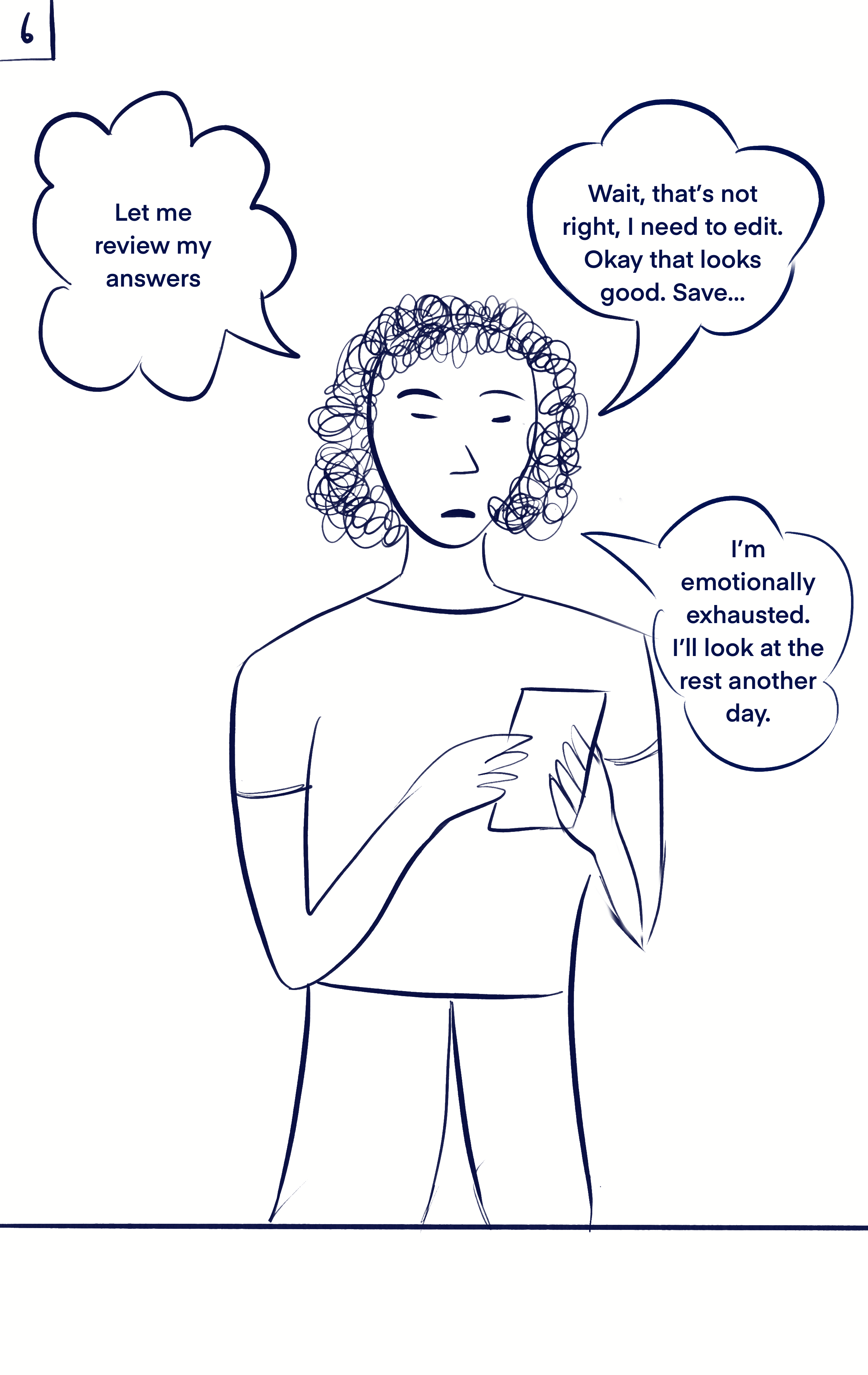
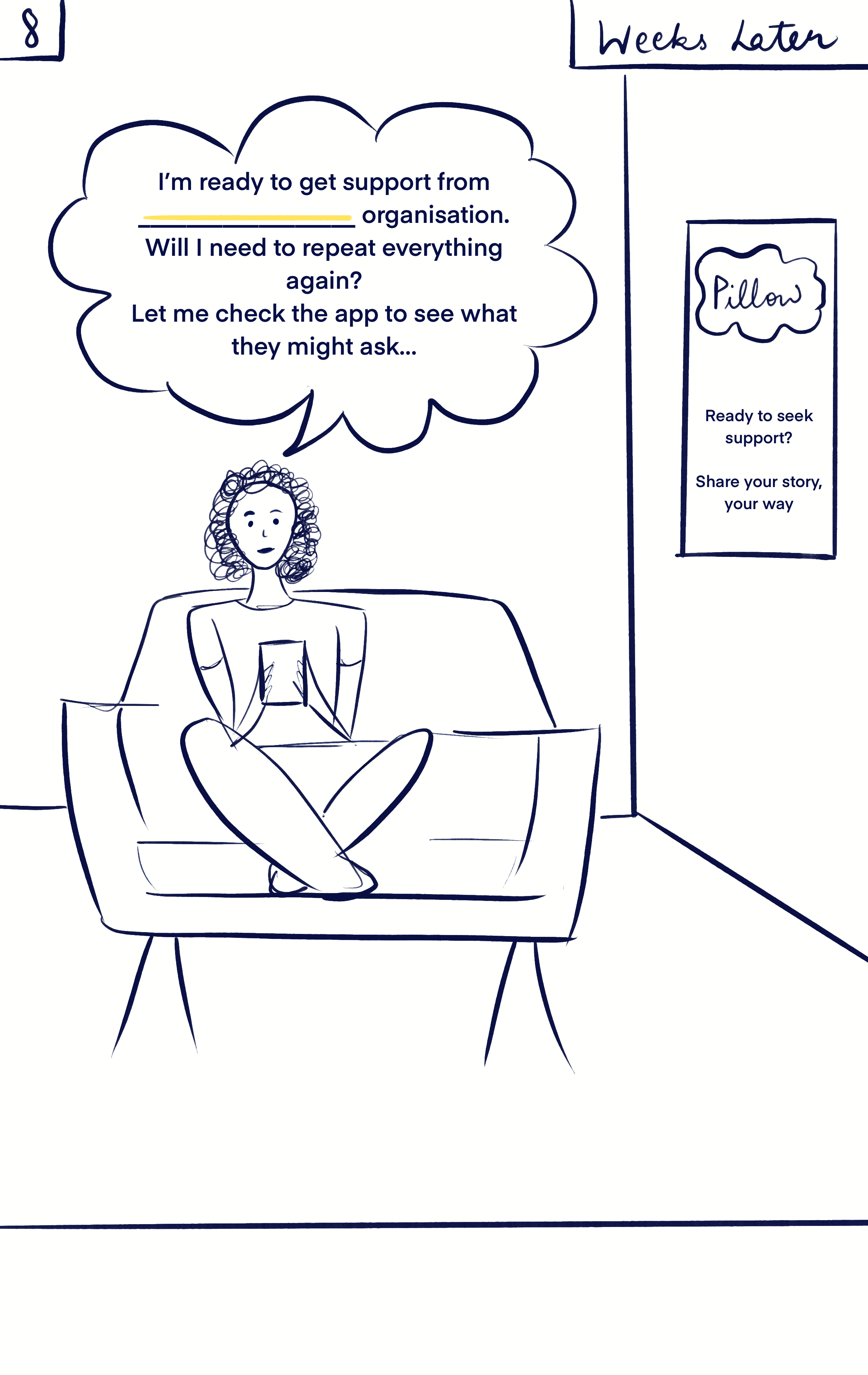
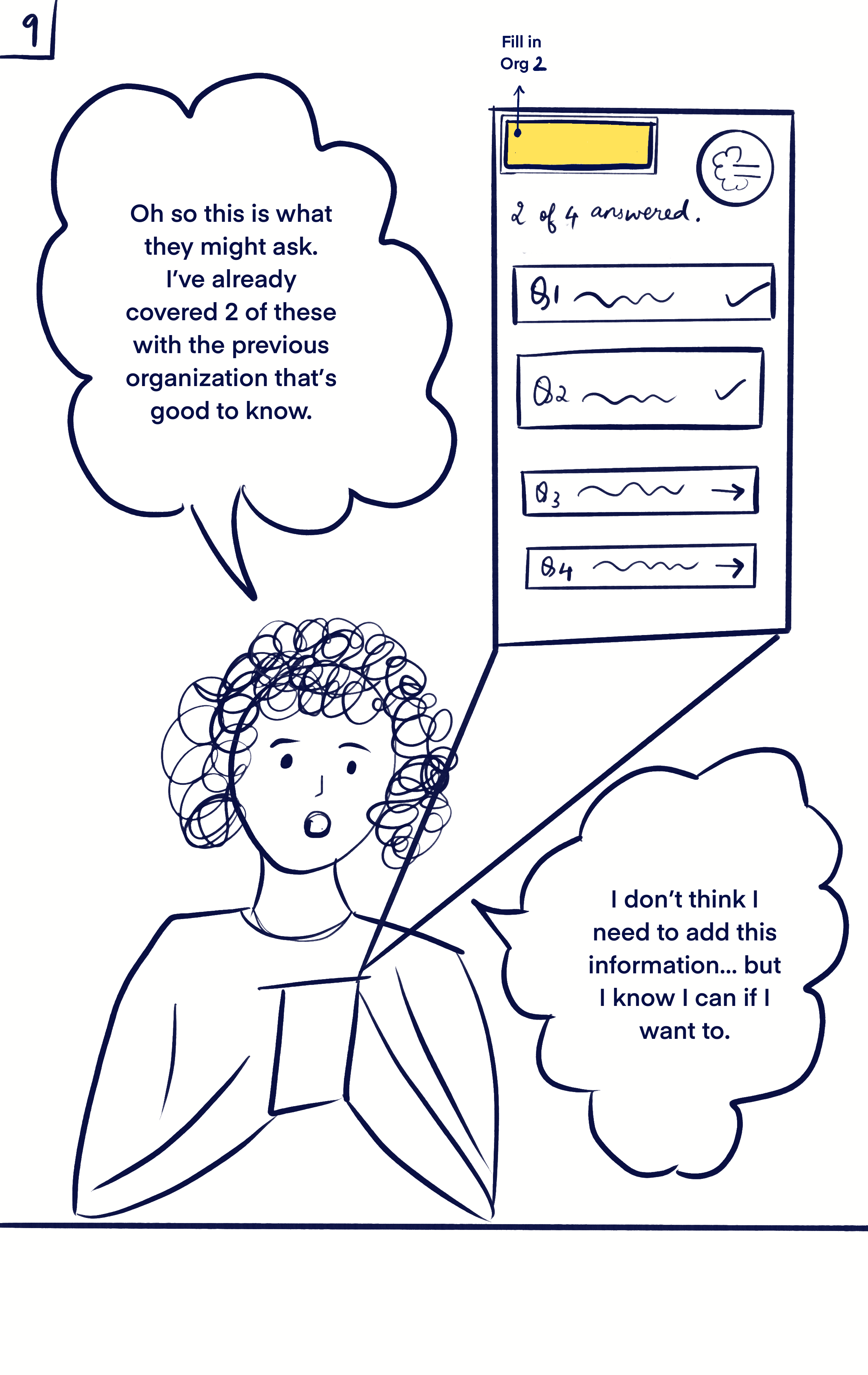
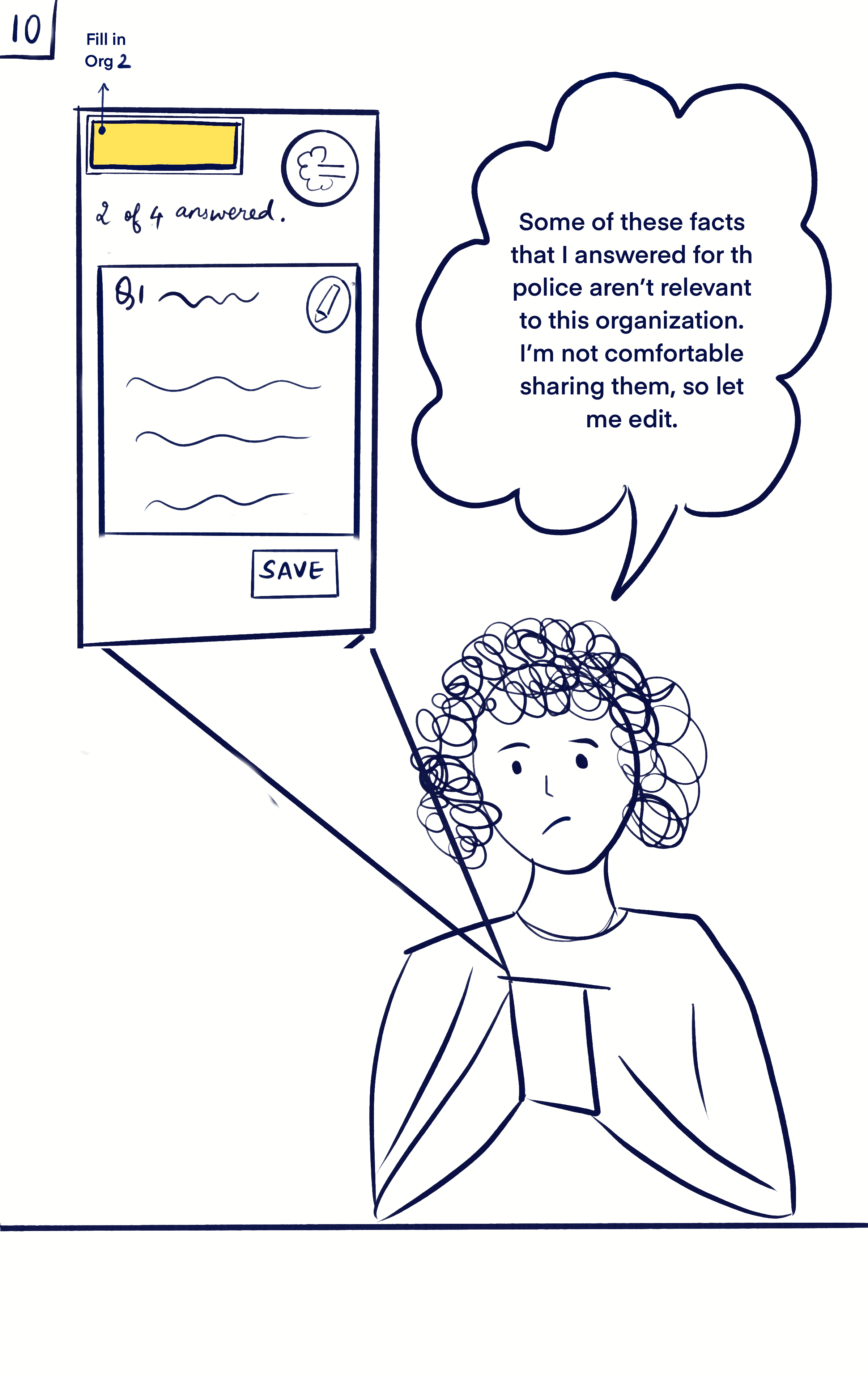
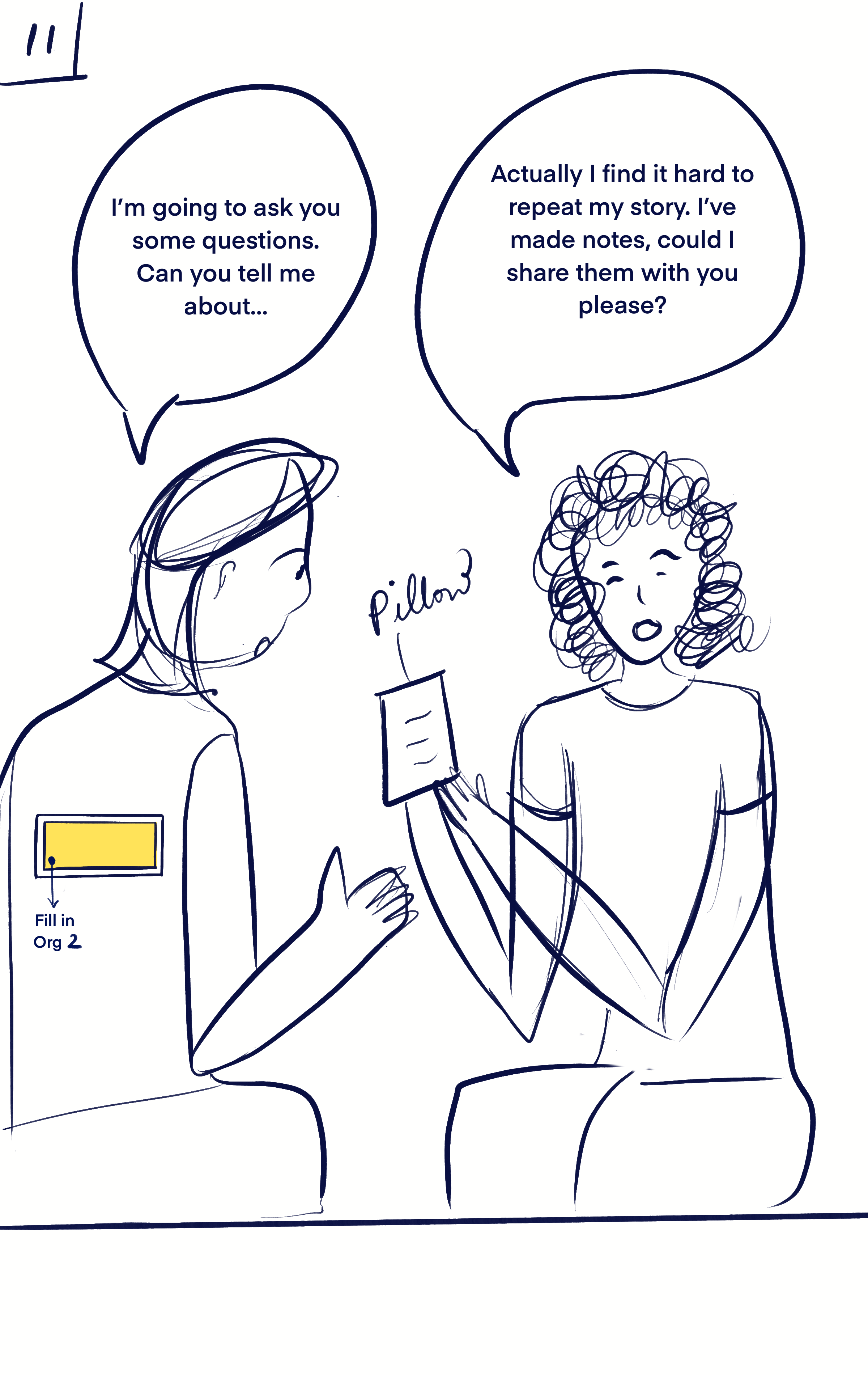
I developed a storyboard to illustrate this concept, showing a survivor using a personal tool to document key information, then choosing when and what to share with different support providers. The storyboard walked through moments like preparing information at home in a safe moment, then providing it to a new counselor without having to verbally recount everything again.
Storyboard of a survivor using the app while approaching different organizations
VALIDATION
We tested the storyboard concept with survivors to understand if this approach would genuinely help. While participants confirmed the pain point was real and urgent, they expressed concern about actively sharing pre-written information with organizations.
They worried it would seem “rehearsed” or that some organizations might not be receptive to answers prepared in advance, potentially affecting how seriously their situation was taken.
However, they did see value in having a personal space to store their information. Not for sharing, but for themselves: to organize their thoughts, prepare for conversations, and have details readily available when needed without having to remember traumatic specifics in high-stress moments.
The pivot: Rather than a sharing tool, the design should function as a personal storage hub. Survivors use it as a reference when they choose to speak with organizations, without the pressure or risk of automated information transfer.
I created a user flow diagram documenting this revised concept, showing how survivors could build their personal hub over time, access it when needed, and use it to support (not replace) their conversations with support providers.
User journey for the concept of sharing story once
IMPACT
This project validated that re-traumatization through repetitive storytelling is a genuine and urgent problem for survivors navigating support organizations.
Our initial concept assumed that all organizations would be receptive to recorded stories, which was not the case. Validation prevented us from building the wrong solution.
The personal storage hub concept maintains survivor agency while still addressing the exhaustion of remembering and recounting traumatic details repeatedly. It gives them a tool to use on their terms.
FUTURE WORK
The concept would benefit from Interviewing receiving organizations (police, support workers, workplace HR) to understand their perspective on prepared information.
REFLECTION
We initially created HMWs and dot-voted internally to decide on a design focus. Cecilia (our responsible design coach) called us out. She pushed us to make the design process more participatory, instead of making decisions on behalf of survivors when we had no lived experience.
When we presented the first iteration of the storyboard to Cecilia, she pointed out that the storyboard presents the app as a “saviour”, and claims to solve the problem of retelling stories. This is not the case in real life, especially since we hadn’t interviewed other organizations yet. So I iterated the storyboard, in which the survivor adopts a tone of “healthy skepticism” of whether the app can help.
Looking back, I want build a stronger muscle for keeping these considerations in mind.